
Learn about pancreatic cancer surgery including Whipple procedure, distal pancreatectomy, and total pancreatectomy. We use laparoscopic and robotic methods for less pain, smaller cuts, and faster recovery.
Pancreatic cancer surgery is the removal of tumors from the pancreas – a gland behind the stomach that helps digest food and control blood sugar. The main surgeries are Whipple procedure (pancreaticoduodenectomy), distal pancreatectomy, and total pancreatectomy. We perform these using laparoscopic (keyhole) or robotic methods whenever possible.
Pancreatic cancer is serious, but surgery offers the best chance for cure when the tumor is found early. Unfortunately, many patients are diagnosed at a late stage. Symptoms include yellow skin (jaundice), weight loss, stomach pain that spreads to the back, new-onset diabetes, and dark urine. If you have these signs, see a doctor quickly.
The Whipple procedure is the most common surgery for cancers in the head of the pancreas. The surgeon removes the head of the pancreas, part of the small intestine, the gallbladder, part of the bile duct, and sometimes part of the stomach. Then he reconnects the remaining pancreas, bile duct, and stomach to the small intestine so digestion can continue. This is a complex surgery that takes 4 to 8 hours.
For cancers in the tail or body of the pancreas, distal pancreatectomy is done. The surgeon removes the left part of the pancreas, often with the spleen. In the past, both surgeries required a very large cut across the belly. Today, with laparoscopic and robotic pancreatectomy, Dr. Ravindra Vats makes only 4 to 6 tiny cuts (0.5–1 cm each). A small camera gives a magnified view. Special long instruments remove the tumor safely. Patients have less blood loss, shorter hospital stays (7–10 days instead of 2–3 weeks), and faster return to normal life.
Robotic pancreatic surgery is even better. The robotic arms have wrist-like movements that can reach deep behind the stomach. The 3D view helps protect important blood vessels like the portal vein and superior mesenteric artery. More lymph nodes can be removed, which may improve the chance of cure. Even complex Whipple procedures can now be done robotically in expert hands.
Surgeon makes 4–6 small cuts (0.5–1 cm) on the upper belly.
A high-definition camera shows the pancreas, tumor, and nearby blood vessels.
The diseased part of the pancreas and nearby lymph nodes are removed.
The remaining pancreas, bile duct, and stomach are reconnected to the intestine.
Tiny cuts mean much less pain after this major surgery. Patients need fewer painkillers.
Patients leave the hospital in 7–10 days instead of 14–21 days with open surgery.
Most patients start liquid diet within 2–3 days and soft foods by day 5–7.
Other benefits: less blood loss (fewer blood transfusions), lower risk of wound infection, and better cosmetic results. Robotic surgery offers 3D vision and tremor-free movements, which is very helpful when working near major arteries. Studies show that laparoscopic and robotic pancreatectomy have the same cancer outcomes as open surgery but with less suffering for the patient.
| Factor | Laparoscopic / Robotic | Open Surgery |
|---|---|---|
| Cut Size | 4–6 small cuts (0.5–1 cm) | One large cut (20–30 cm) |
| Hospital Stay | 7–10 days | 14–21 days |
| Blood Loss | Less (rarely needs transfusion) | More (often needs transfusion) |
| Return to Normal Diet | 2–3 weeks | 4–6 weeks |
| Procedure | Description | Recovery Time |
|---|---|---|
| Whipple Procedure (Pancreaticoduodenectomy) | Removal of pancreatic head, duodenum, gallbladder, bile duct, and sometimes part of stomach. | 6–8 weeks |
| Distal Pancreatectomy | Removal of pancreatic body and tail, often with spleen. | 4–6 weeks |
| Total Pancreatectomy | Removal of entire pancreas, spleen, gallbladder, bile duct, and part of stomach and intestine. | 8–10 weeks |
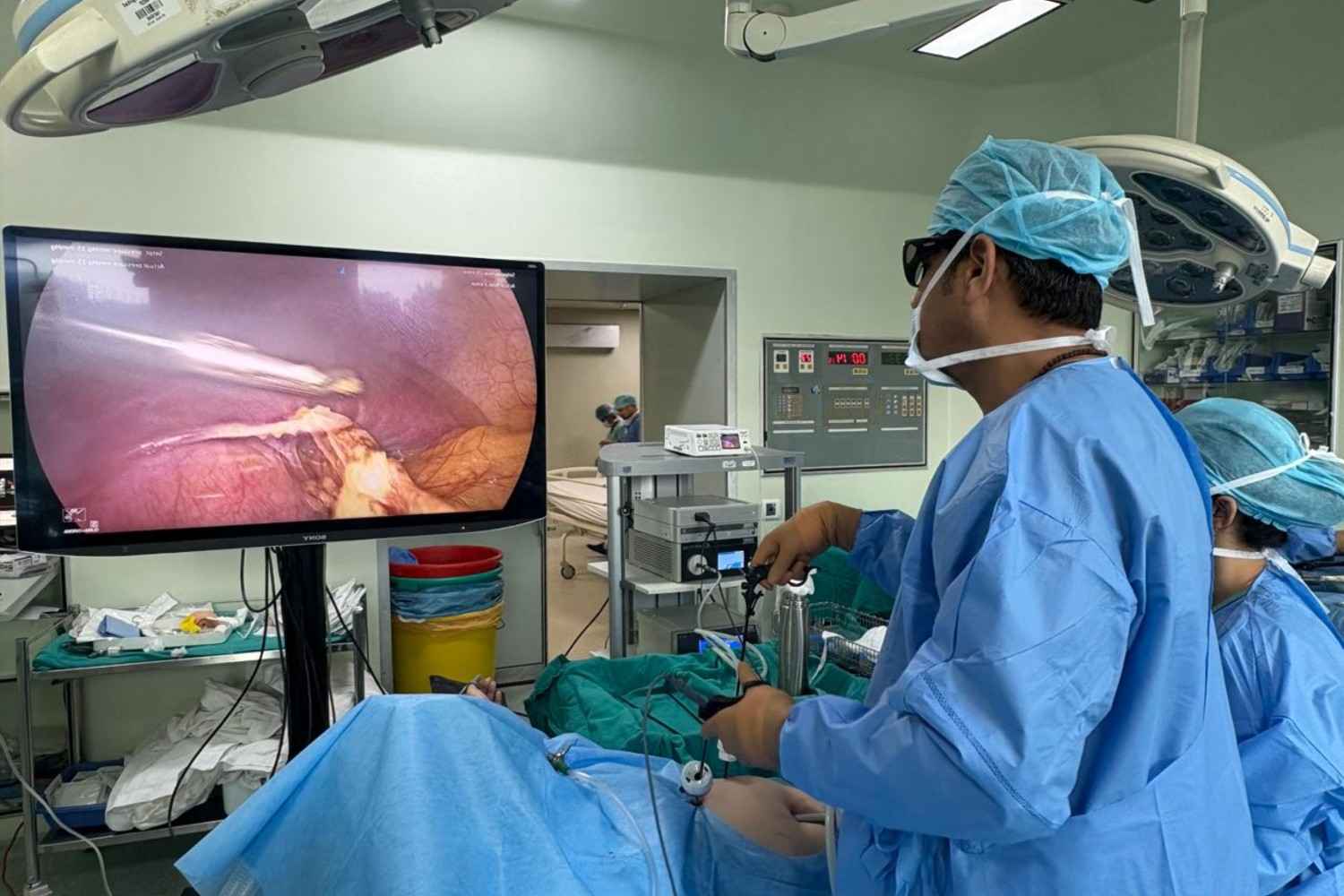
We use 4K and 3D laparoscopes, robotic systems with fluorescence imaging, and advanced energy devices. Indocyanine green (ICG) dye helps us see blood supply to the pancreas and intestine during reconstruction. Intraoperative ultrasound helps locate deep tumors. All surgeries are done in ultra-clean operating rooms with a dedicated HPB team.
Book your consultation with Dr. Ravindra Vats and get trusted surgical care with advanced treatment.
Book Appointment