Learn about fundoplication surgery – the most effective treatment for GERD (acid reflux) and hiatal hernia. We use laparoscopic and robotic methods with tiny cuts, less pain, and fast recovery.
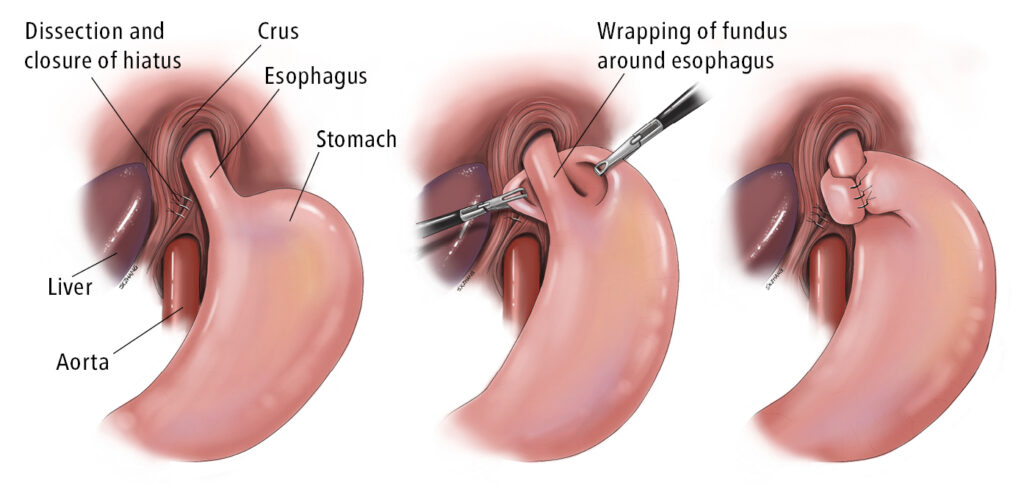
Fundoplication is a surgery that fixes GERD (gastroesophageal reflux disease) and hiatal hernia. The top part of the stomach is wrapped around the lower food pipe (esophagus) to strengthen the valve that stops acid from going up. We do this surgery using laparoscopic (keyhole) or robotic methods.
If you have heartburn, regurgitation, chest pain, or trouble swallowing despite taking medicines, fundoplication can be life-changing. In a hiatal hernia, part of the stomach pushes up into the chest through a hole in the diaphragm. This makes acid reflux much worse. During surgery, the doctor pulls the stomach back down and repairs the hole. Then he wraps the stomach around the esophagus – like a warm hug that keeps the valve tight.
In the past, this surgery needed a large cut on the chest or belly. Today, with laparoscopic and robotic fundoplication, Dr. Ravindra Vats makes only 4 to 5 tiny cuts (each smaller than 1 cm). A small camera shows everything on a big screen. Special long tools are used to do the wrap. The surgery takes about 1.5 to 2.5 hours.
Robotic fundoplication is even more precise. The surgeon sits at a console and controls robotic arms. These arms give a 3D magnified view and can rotate in ways human hands cannot. This is very helpful because the vagus nerve and aorta are very close. With robotic help, the wrap is done perfectly – not too tight, not too loose. Most patients stop all acid reflux medicines after surgery and can eat anything without fear.
Doctor makes 4–5 small cuts (0.5 to 1 cm) on your upper belly.
If there is a hiatal hernia, the stomach is pulled down and the hole in the diaphragm is closed.
The top part of the stomach is wrapped around the lower esophagus to create a new valve.
The wrap is stitched in place. Small cuts are closed. No more acid reflux!
More than 90% of patients stop all acid reflux medicines after surgery.
Cuts are very small, so scars fade quickly and are barely visible.
Most patients go home in 2 days and return to normal eating within a week.
Other benefits: much less pain than open surgery, lower risk of infection, shorter hospital stay, and no need for lifelong acid reflux medicines. Robotic fundoplication gives even better 3D vision and steadier movements, which is very important near the delicate vagus nerve and aorta. Patients can finally enjoy spicy foods, sleep flat at night, and stop worrying about heartburn.
| Factor | Laparoscopic / Robotic | Open Surgery |
|---|---|---|
| Cut Size | Small (0.5–1 cm each) | Large (15–20 cm) |
| Hospital Stay | 2–3 days | 7–10 days |
| Pain After Surgery | Mild | Moderate to Severe |
| Return to Normal Diet | 3–7 days | 2–4 weeks |
| Procedure | Description | Recovery Time |
|---|---|---|
| Laparoscopic Nissen Fundoplication | Complete 360-degree wrap. Best for severe GERD. | 1–2 weeks |
| Robotic Nissen Fundoplication | High-tech robotic arms with 3D view for perfect wrap tension. | 1–2 weeks |
| Laparoscopic Toupet Fundoplication | Partial 270-degree wrap. For patients with weak swallowing. | 1–2 weeks |
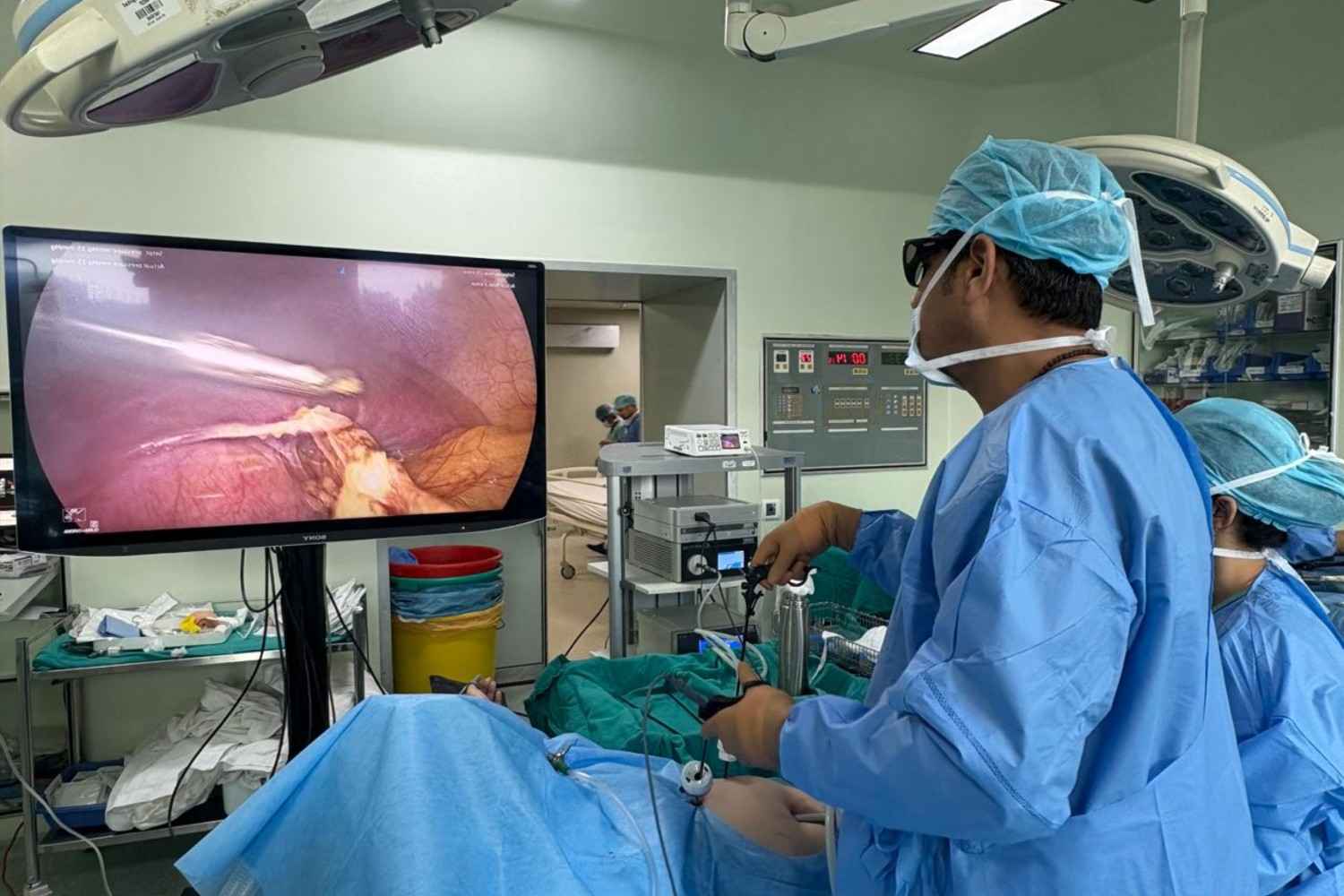
Our operating room has the latest robotic systems, 4K cameras, and special energy devices that cut and seal tissue with no bleeding. We also use intraoperative endoscopy to check that the wrap is perfect after surgery. Every step is done with extreme care to protect the vagus nerve and ensure you never have heartburn again.
Book your consultation with Dr. Ravindra Vats and get trusted surgical care with advanced treatment.
Book Appointment