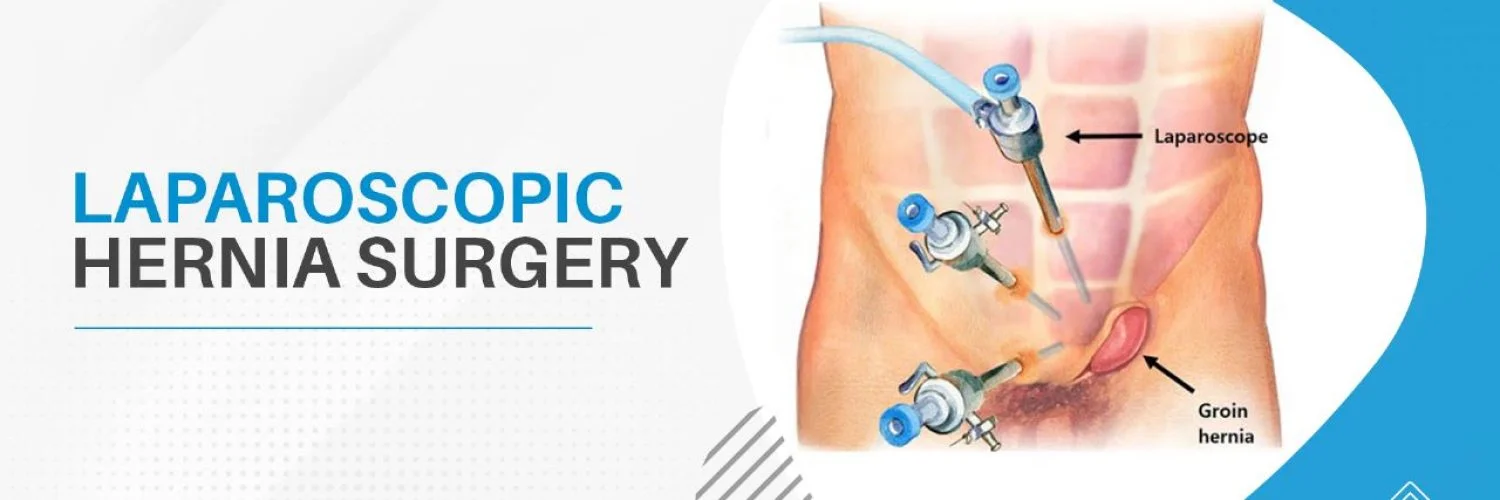
Fix your hernia the smart way with Laparoscopic Hernia Surgery, a keyhole method that means smaller cuts, less pain, and getting back to your life faster.
Laparoscopic Hernia Surgery is a modern, gentle way to fix a hernia. A hernia happens when an organ or fatty tissue pushes through a weak spot in the nearby muscle wall. Instead of one large cut, the surgeon makes a few tiny openings and uses a small camera to repair the weakness. This method is safer, gentler, and helps you heal faster.
A hernia can feel like a soft lump or bulge, often in the belly or groin area. It may cause pain, heaviness, or discomfort when you cough, bend, or lift something heavy. Laparoscopic hernia repair fixes the weak muscle using a special mesh that strengthens the area. The mesh acts like a patch, so the hernia does not come back.
Because the surgery uses small keyhole cuts, there is less damage to healthy tissue. You will have very little bleeding, almost no scars, and a much lower chance of infection. The camera gives the doctor a crystal-clear view inside your body, so the repair is very precise. Most patients leave the hospital the same day or after just one night.
This type of surgery is perfect for inguinal (groin) hernias, umbilical (belly button) hernias, incisional hernias, and hiatal hernias. If you are tired of living with hernia pain or worry about the bulge getting bigger, laparoscopic surgery is a top choice that gets you back to normal within days instead of weeks.
You get anesthesia so you sleep comfortably. The surgeon makes 3 to 4 tiny cuts (about 0.5 to 1 cm each).
A laparoscope (tiny camera) is inserted through one cut to show the hernia on a large screen.
Using special tools, the surgeon pushes the bulging tissue back and places a soft mesh to strengthen the muscle wall.
The small cuts are closed with glue or a bandage. You wake up with very little pain and can go home soon.
With cuts as small as a pencil tip, you will barely see any marks after healing. No big scars like open surgery.
Because muscles are not cut apart, most patients need only mild pain relievers for a day or two.
Return to desk work in 3–5 days. Light activities within a week. Full healing in just 2–3 weeks.
More great benefits: Lower risk of hernia coming back, less time in the hospital (often same-day discharge), and you can shower and move around sooner. Since the mesh is placed from inside, the repair is very strong. Patients also report less swelling and a much faster return to sports or exercise. Laparoscopic hernia surgery is simply better for most people.
| Comparison Point | Laparoscopic (Keyhole) | Open Surgery |
|---|---|---|
| Cut Size | 3–4 tiny cuts (0.5–1 cm) | One large cut (5–10 cm) |
| Hospital Stay | Usually 0–1 night | 2 to 4 nights |
| Pain Level | Very mild | Moderate to severe |
| Back to Work | 5 to 7 days | 3 to 6 weeks |
| Hernia Type | Description | Recovery Time |
|---|---|---|
| Inguinal (Groin) Hernia | Most common type. The intestine bulges through the lower belly wall. | 1–2 weeks |
| Umbilical (Belly Button) Hernia | Soft bulge near the navel. Often seen in adults and children. | 1 week |
| Incisional Hernia | Hernia that forms at the site of a previous surgery scar. | 2 weeks |
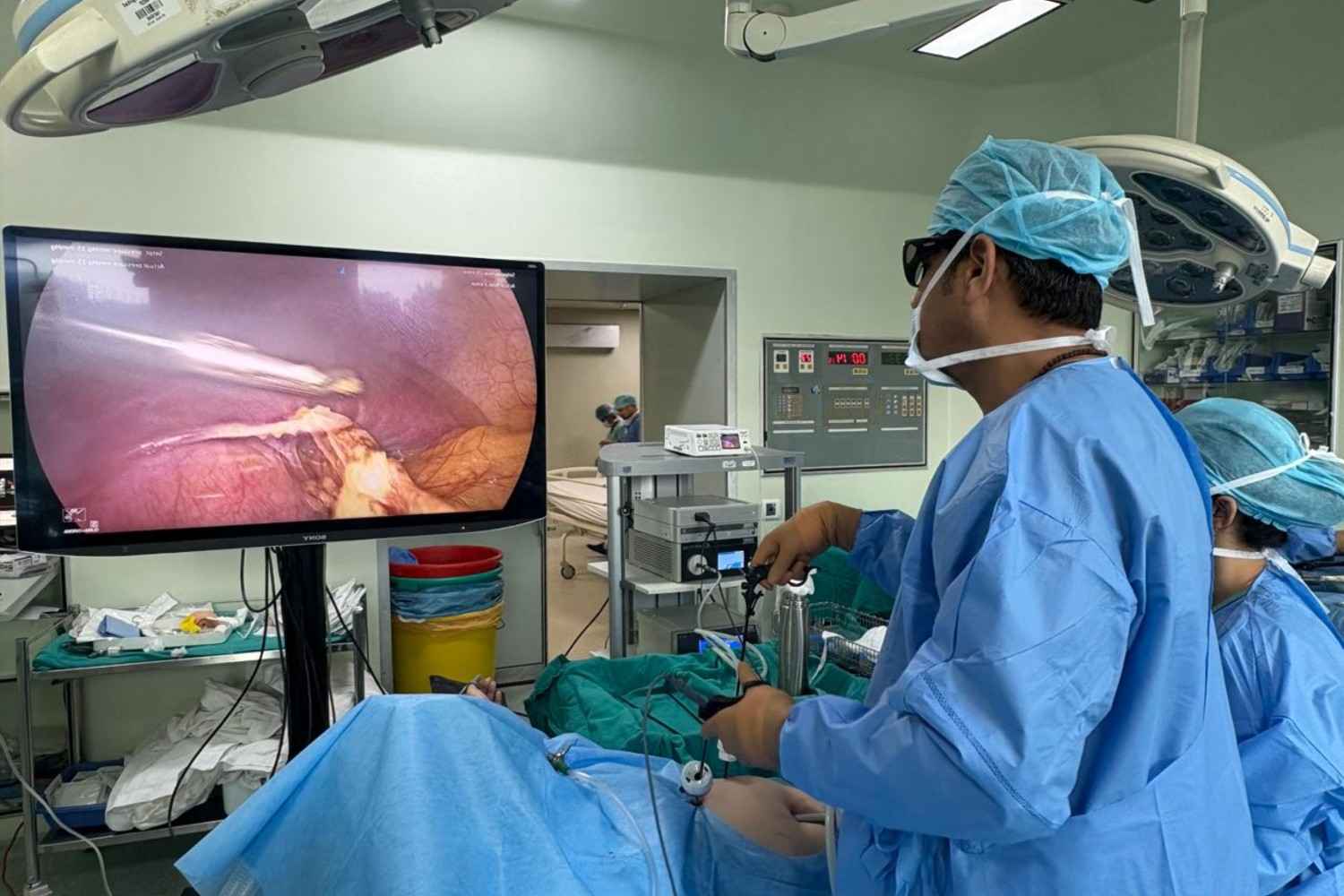
We use high-definition 3D cameras and ultra-thin laparoscopic tools. This allows Dr. Vats to see every small detail and place the mesh with perfect accuracy, giving you the best possible results.
Book your consultation with Dr. Ravindra Vats and get trusted surgical care with advanced treatment.
Book Appointment