Learn about stomach cancer surgery (gastrectomy) performed with laparoscopic and robotic methods. We remove the tumor with tiny cuts, less pain, and faster recovery so you can get back to eating and living well.
Gastrectomy is the surgery to remove part or all of the stomach that contains cancer. It is the main treatment for stomach cancer. We perform this surgery using laparoscopic (keyhole) or robotic methods to give you the best chance of cure with fewer side effects.
Stomach cancer can cause weight loss, pain after eating, nausea, vomiting, and blood in stool. If not treated early, it can spread to other organs. The good news is that when caught early, surgery can remove the cancer completely. The type of surgery depends on where the tumor is located:
In the past, stomach cancer surgery required a long cut from the breastbone to the belly button. Recovery was very hard – patients stayed in the hospital for 10-14 days and faced a lot of pain. Today, with laparoscopic and robotic gastrectomy, Dr. Ravindra Vats makes only 4 to 6 tiny cuts (each about 0.5 to 1 cm). A small camera shows the entire stomach and nearby lymph nodes on a large screen. Special long instruments are used to remove the cancer safely.
Robotic gastrectomy gives even better 3D vision and steadier movements. This is very helpful when working near large blood vessels and the pancreas. Surgeons can remove lymph nodes more thoroughly, which improves the chance of cure. Most patients leave the hospital in 5 to 7 days and return to a normal diet within 3 to 4 weeks.
Surgeon makes 4–6 small cuts (0.5–1 cm) on the upper belly.
A high-definition camera shows the stomach, tumor, and lymph nodes.
The diseased part of the stomach and nearby lymph nodes are removed.
The remaining stomach (or food pipe) is connected to the small intestine.
Tiny cuts mean less pain, fewer wound problems, and better cosmetic results.
Patients leave the hospital 5–7 days after surgery instead of 10–14 days.
Magnified view helps remove more lymph nodes, lowering the chance of cancer coming back.
Other benefits: less bleeding, lower risk of pneumonia, and faster return to eating. Robotic surgery offers wrist-like instruments that can reach difficult areas. Studies show that patients who have laparoscopic or robotic gastrectomy have the same cure rates as open surgery but with much better quality of life during recovery.
| Factor | Laparoscopic / Robotic | Open Surgery |
|---|---|---|
| Cut Size | 4–6 small cuts (0.5–1 cm) | One large cut (15–20 cm) |
| Hospital Stay | 5–7 days | 10–14 days |
| Pain After Surgery | Moderate (controlled easily) | Severe |
| Return to Normal Diet | 3–4 weeks | 6–8 weeks |
| Type of Surgery | Description | Recovery Time |
|---|---|---|
| Laparoscopic Subtotal Gastrectomy | Removal of lower part of stomach. Upper stomach is saved. | 3–4 weeks |
| Robotic Total Gastrectomy | Removal of whole stomach with precise lymph node dissection. | 4–5 weeks |
| Laparoscopic D2 Lymphadenectomy | Removal of stomach along with second-level lymph nodes for advanced cancer. | 4–5 weeks |
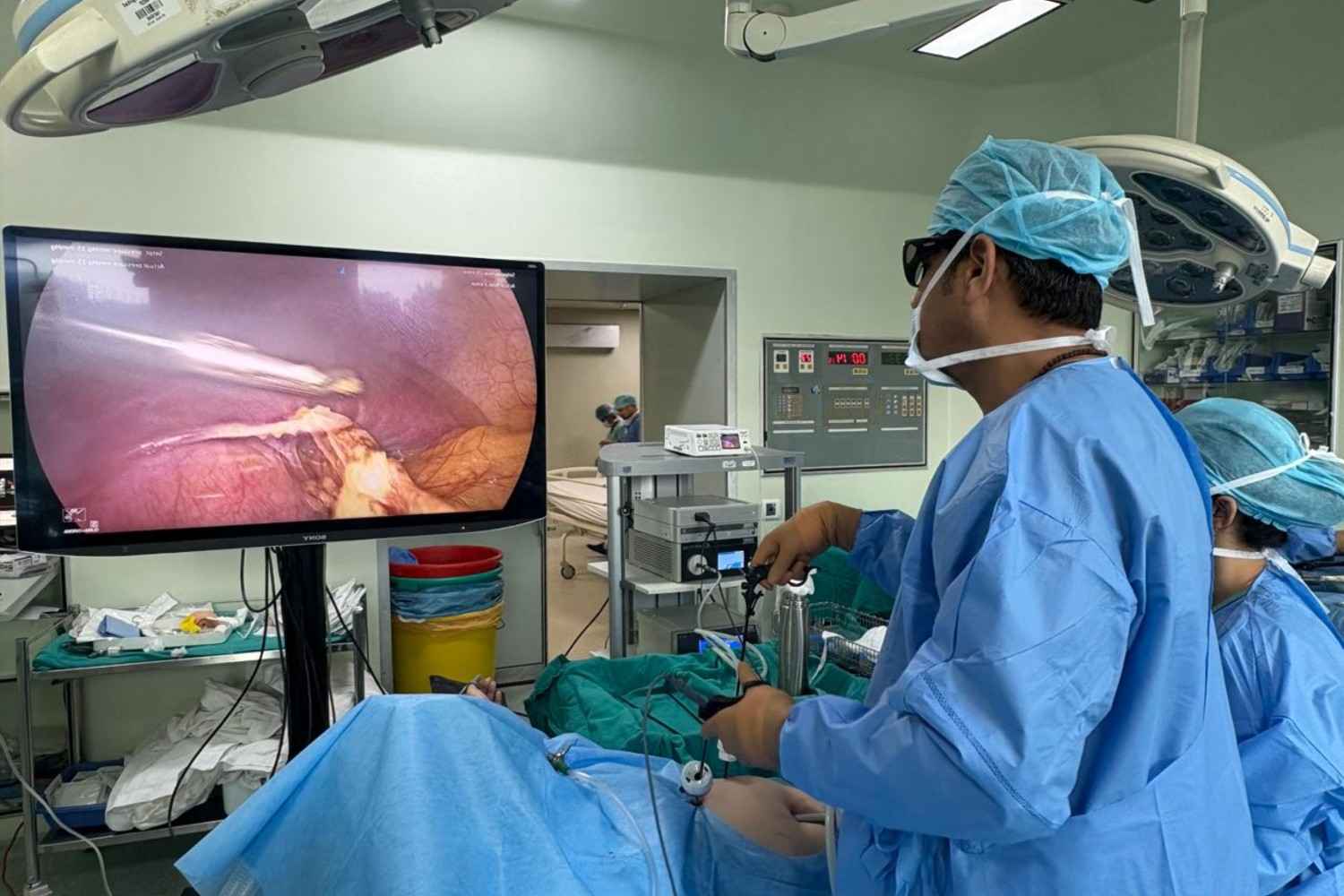
We use 4K laparoscopes, robotic systems with fluorescence imaging, and energy devices that cut and seal tissue without bleeding. Indocyanine green (ICG) dye helps us see lymph nodes and blood flow during surgery. This means safer removal of cancer and fewer complications. All surgeries are performed in ultra-clean operating rooms with a dedicated cancer team.
Book your consultation with Dr. Ravindra Vats and get trusted surgical care with advanced treatment.
Book Appointment